

Why Pre-Packing Room-by-room Decluttering Strategies Are Critical

Packing your entire life into cardboard boxes is exhausting, but packing items you no longer need or want is a waste of time, energy, and money. Applying systematic Room-by-room Decluttering Strategies Before Starting The Packing Process allows you to streamline your move before a single piece of tape touches a box.
Industry research shows that reducing overall household volume by just twenty percent significantly decreases transit costs and total labor hours. By systematically auditing each space, you eliminate spatial drag and establish complete control over your home transition.
At First Class Movers LLC, we consistently observe that homeowners who execute structured decluttering enjoy a far smoother relocation experience. Sorting your belongings zone by zone ensures that only valuable, functional items make it to your new destination.
The Hidden Friction of Decluttering While Packing
Many people attempt to declutter and pack simultaneously, which quickly leads to decision fatigue. When you try to evaluate the sentimental or practical worth of an item while holding a roll of packing tape, your productivity slows to a crawl.
Decluttering requires an analytical mindset, whereas packing requires tactical efficiency. Separating these two operational phases prevents mental burnout and keeps your timeline on schedule.
Executing targeted Room-by-room Decluttering Strategies Before Starting The Packing Process protects your moving timeline from chaotic delays. Establishing clear rules for what stays and what goes before packing begins keeps your momentum steady.
Executing Room-by-room Decluttering Strategies Before Starting The Packing Process
1. The Kitchen: High-Density Audit
Kitchens contain more individual items per square foot than almost any other area in the home. Begin by purging expired pantry goods, duplicate utensils, and chipped glassware that you routinely skip over when setting the table.
Assess small appliances that sit permanently on high shelves or in deep cabinets. If an appliance has not been used in the past twelve months, donate it rather than paying to pack and transport its weight.
2. Living and Entertainment Areas: The Media and Decor Sweep
Living rooms easily accumulate hidden clutter, including outdated electronics, tangled cables, mismatched throw pillows, and forgotten media collections. Disconnect unused devices and consolidate necessary cords into labeled bags immediately.
Be intentional with decorative accents and bulky furniture pieces. Evaluating how your current floor plan transfers to your new residence prevents you from transporting items that simply will not fit.
3. Bedrooms and Closets: The Wearability Test
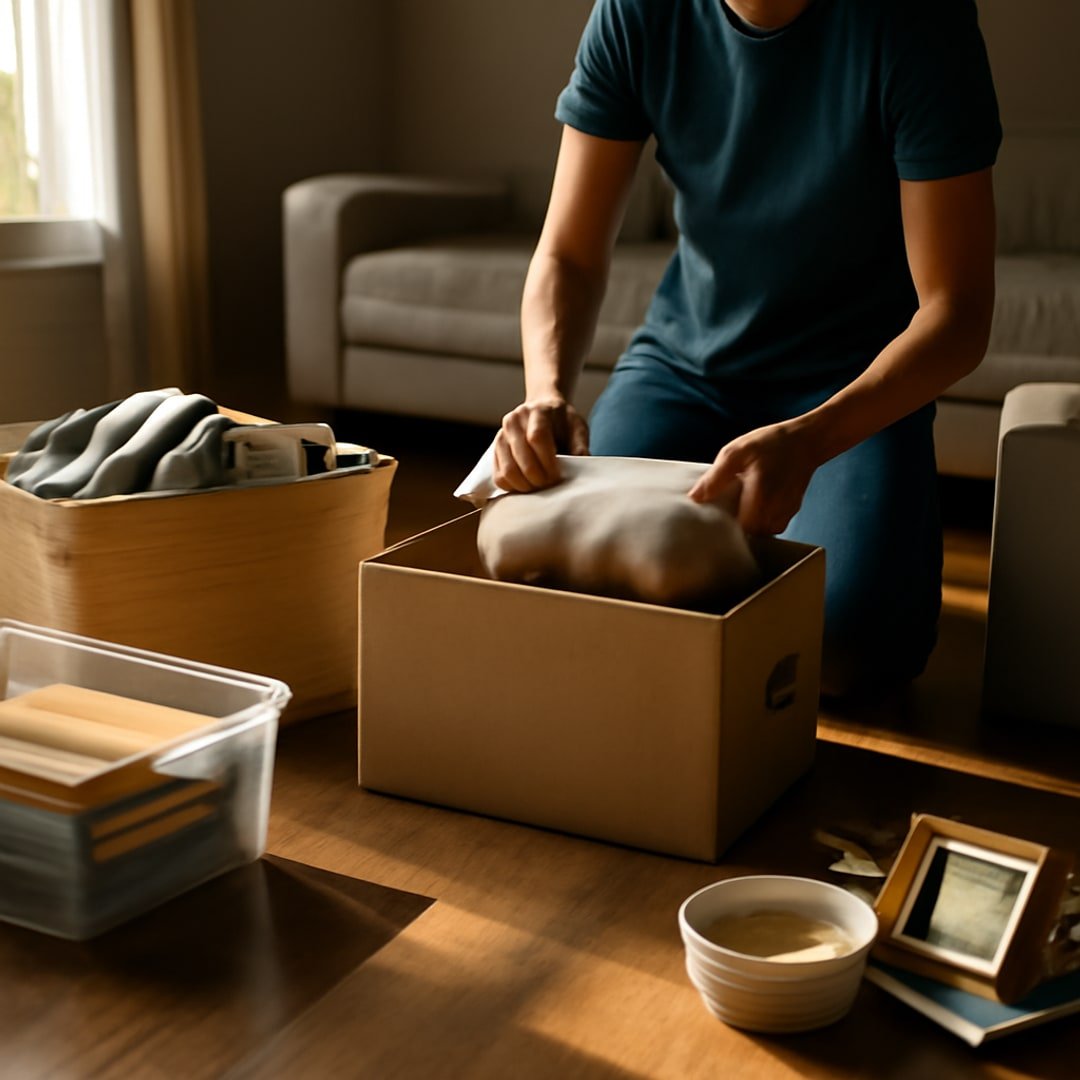
Closets are notorious hotspots for deferred decisions. Apply a strict categorization method to your wardrobe by sorting clothing into clear groups: keep, donate, sell, and discard.
Be honest about condition, fit, and practical utility. Transporting off-season clothes you no longer wear consumes valuable wardrobe box space that could be used for items you love.
4. Bathrooms and Linen Closets: Consumables and Textiles
Bathrooms often hide expired medications, half-empty skincare bottles, and worn-out towels. Safely dispose of expired pharmaceuticals and toss cosmetics past their shelf life.
Audit your linen inventory by retaining no more than two to three sets of sheets per bed. Excess, frayed towels can be donated to local animal shelters rather than packed into heavy boxes.
5. Garage, Attic, and Storage Spaces: The Final Frontier
Storage zones tend to hold items we have deliberately ignored for years. Categorize hardware, lawn tools, and seasonal gear by operational status and actual frequency of use.
Hazardous materials such as paint, pesticides, and propane tanks cannot be safely transported in standard moving vehicles. Liquidate or properly dispose of these items well before packing day arrives.
Establishing the Four-Category Sorting Framework
To keep your momentum strong throughout each room, use a standardized sorting methodology. Set up physical staging stations in each zone using four clearly marked containers:
- Keep: Items in active use that match the spatial design of your new home.
- Donate/Sell: Quality items that no longer serve your household but retain functional value.
- Recycle/Dispose: Broken, expired, or non-functional items beyond repair.
- Relocate: Items that belong in a different room in your current house before final packing.
Streamline Your Upcoming Relocation
Mastering these Room-by-room Decluttering Strategies Before Starting The Packing Process ensures your move is efficient, organized, and cost-effective. Once your home is streamlined and ready for transit, working with seasoned professionals makes all the difference.
First Class Movers LLC is here to handle your logistics with precision, care, and industry-leading expertise. Contact First Class Movers LLC today to request a comprehensive moving quote and secure your preferred moving date.